





Quercetin for Seasonal Allergy Relief
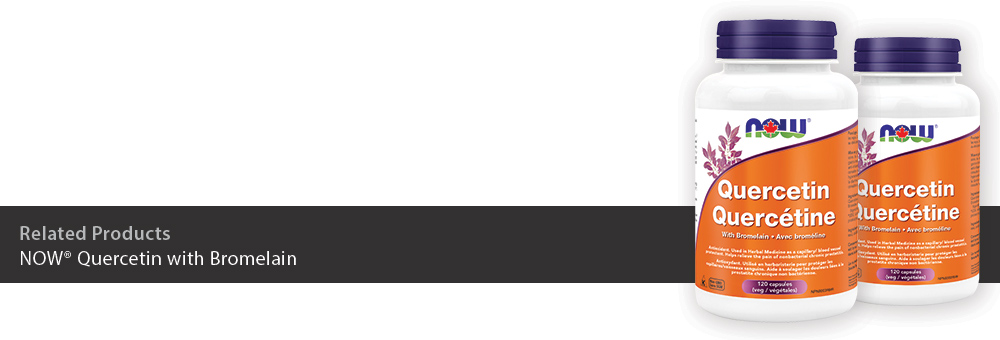
Quercetin helps support seasonal immune function and is a treatment option for allergies. It has antioxidant and anti-inflammatory properties. The combination with Bromelain may provide relief for seasonal allergies.
About Quercetin
If you have ever eaten an onion, apple or berries, or drank tea or wine, you have ingested a flavonoid called quercetin. Flavonoids are compounds found in many fruits and vegetables (mostly in the skin and leaves). Studies have shown a wide variety of properties in various flavonoids including anti-inflammatory, anti-thrombogenic, antidiabetic, anticancer, and neuroprotective activities.
About Bromelain
Bromelain is a digestive enzyme extracted from pineapples, and often found in digestion formulas. In addition to acting as a digestive aid for high protein foods, bromelain can also positively influence the immune system. It is used in herbal medicine to help relieve minor pain, swelling and inflammation. Bromelain is a mucolytic agent, which means it breaks down mucus.
The Role of Quercetin in Allergies and Asthma
In testing, quercetin clearly inhibits the allergic cascade that results in the unpleasant symptoms associated with hay fever (allergic rhinitis). Clinical trials have supported the interest in quercetin as a possible solution to congestion, the secretion of excess tears, itching and other bothersome symptoms of hay fever.
How Much Quercetin is Needed?
Most people get about 5 to 40 mg of quercetin daily from food. In order to reach therapeutic doses of quercetin (usually in the range of 200-500 mg per day), one would require a very high consumption of whole fruits and vegetables. Certainly, supplements are a much more realistic and sustainable source of the therapeutic levels of quercetin. NOW® quercetin is extracted from the seed of the Fava D’Anta (Rutin) plant in Brazil. NOW® has demonstrated superior outcomes in studies. For best absorption, quercetin supplements should be combined with a meal containing fat and fibre.
References:
1. https://lpi.oregonstate.edu/mic/dietary-factors/phytochemicals/flavonoids
2. Marseglia G, Licari A, Leonardi S, et al. A polycentric, randomized, parallel-group, study on Lertal®, a multicomponent nutraceutical, as preventive treatment in children with allergic rhinoconjunctivitis: phase II. Ital J Pediatr. 2019;45(1):84. View abstract
3. Hirano, T., et al. “Preventative effect of a flavonoid, enzymatically modified isoquercitrin on ocular symptoms of Japanese cedar pollinosis.” Allergology International Vol.58, No. 3 (2009): 373–382.
4. Braun JM, Schneider B, Beuth HJ. Therapeutic use, efficiency and safety of the proteolytic pineapple enzyme Bromelain-POS in children with acute sinusitis in Germany. In Vivo. 2005 Mar-Apr;19(2):417-21. PMID: 15796206.
5. Rogerio, A.P., et al. “Anti-inflammatory effect of quercetin-loaded microemulsion in the airways allergic inflammatory model in mice.” Pharmacological Research Vol. 61, No. 4 (2010): 288–297.
6. Janssen K, Mensink RP, Cox FJ, et al. Effects of the flavonoids quercetin and apigenin on hemostasis in healthy volunteers: results from an in vitro and a dietary supplement study. Am J Clin Nutr 1998;67:255-62.
7. Harwood M, Danielewska-Nikiel B, Borzelleca JF, et al. A critical review of the data related to the safety of quercetin and lack of evidence of in vivo toxicity, including lack of genotoxic / carcinogenic properties. Food Chem Toxicol 2007;45:2179-205.
8. https://www.nowfoods.ca/supplements/quercetin-bromelain-veg-capsules-ca
About the Author: Thalia Charney

Thalia Charney’s lifelong passion for all things nutrition and healthy living make her the ideal Nutrition and Health Educator for NOW Health Group Canada. With over 30 years in the health industry, her formal training in Naturopathy, personal and professional experience, form a strong basis for her speaking and education. Her experience includes an eclectic background in herbal medicine, nutrition, essential oils, green living, meditation, vegetarian cooking, and working as a wellness coach, fitness instructor and personal trainer.